
Author: Babylovegrowth

  • Understanding Property Investment Tax Explained

    Understanding Property Investment Tax Explained

    Property investment tax touches every property owner yet most overlook its true power. Think you only pay a bit extra on rent or when you sell? Actually, capital gains tax can take up to 28 percent of your profit in the UK. But the smart investor knows tax is not just a burden. It is a lever for maximising wealth if you understand how it really works.

    Table of Contents

    Quick Summary

    Takeaway Explanation
    Understand principal tax types Familiarise yourself with rental income tax, capital gains tax, and stamp duty to navigate liabilities easily.
    Utilise tax deductions efficiently Leverage deductions for mortgage interest and property expenses to minimise taxable income effectively.
    Monitor tax regulations changes Stay updated with evolving tax laws to maintain compliance and optimise investment strategies.
    Strategically plan for tax implications Incorporate tax predictions into your financial planning to maximise returns and shape your investment decisions.
    Use tax as a strategic tool Treat taxation as a means to enhance portfolio performance rather than a mere financial obligation.

    What is Property Investment Tax and Its Purpose?

    Property investment tax represents a comprehensive financial mechanism designed to capture economic value generated through real estate transactions and ownership. At its core, this tax system determines how financial gains from property investments are assessed, reported, and ultimately taxed by governmental authorities.

    Understanding the Core Concept

    Property investment tax encompasses multiple taxation elements that impact property investors throughout their investment journey. This includes taxes levied on rental income, capital gains from property sales, and various transactional expenses associated with real estate investments. Explore our comprehensive investment strategies to understand how taxation influences your property portfolio development.

    According to research from the IRS Publication 550, property investment taxation serves several critical purposes:

    • Generating government revenue
    • Regulating property market dynamics
    • Encouraging specific investment behaviours
    • Redistributing economic wealth

    Taxation Mechanisms in Property Investment

    The taxation framework for property investments involves multiple components that investors must comprehend. Rental income is typically taxed as ordinary income, with investors able to offset this through legitimate property-related expenses. Capital gains tax applies when a property is sold at a profit, with rates varying based on the duration of ownership and individual tax circumstances.

    Key considerations in property investment taxation include understanding:

    • Depreciation allowances
    • Mortgage interest deductions
    • Potential tax credits for property improvements
    • Regional and national tax regulations

    Successful property investors recognise that taxation is not merely a financial obligation but a strategic element of their investment approach. By comprehending these mechanisms, investors can make more informed decisions, optimise their tax liabilities, and develop more robust investment strategies.

    Why Property Investment Tax Matters for Investors

    Property investment tax represents more than a financial obligation for real estate investors. It is a critical strategic component that directly influences investment profitability, financial planning, and long-term wealth generation strategies.

    Financial Impact and Strategic Planning

    Understanding property investment tax enables investors to make sophisticated financial decisions that maximise returns and minimise tax liabilities. Discover advanced investment approaches that integrate tax efficiency into your property portfolio management.

    According to research from the Lincoln Institute of Land Policy, property taxation plays a fundamental role in shaping investment behaviour and economic outcomes. Investors who comprehend these mechanisms can strategically:

    • Predict potential tax implications
    • Structure investments for optimal tax efficiency
    • Leverage legal tax reduction strategies
    • Align investment goals with tax regulations

    Risk Management and Investment Optimization

    Tax considerations are integral to comprehensive risk management in property investment. Effective tax planning can significantly impact an investor’s net returns by reducing unnecessary financial burdens and creating opportunities for strategic reinvestment.

    Key tax-related considerations for investors include:

    • Understanding marginal tax rates
    • Identifying legitimate expense deductions
    • Exploring tax-efficient investment structures
    • Monitoring changing tax legislation

    Successful property investors view taxation not as a complex obstacle but as a strategic tool for financial optimization. By developing a nuanced understanding of property investment tax, investors can transform potential tax challenges into opportunities for enhanced portfolio performance and wealth accumulation.

    How Property Investment Tax Works in the UK

    Property investment taxation in the United Kingdom represents a complex system of financial regulations designed to capture economic value generated through real estate transactions and ownership. Investors must navigate multiple taxation layers that significantly impact investment profitability and strategic decision making.

    Primary Taxation Components

    The UK property investment tax framework encompasses several critical elements that investors must comprehend. Explore potential investment opportunities that consider these intricate tax mechanisms.

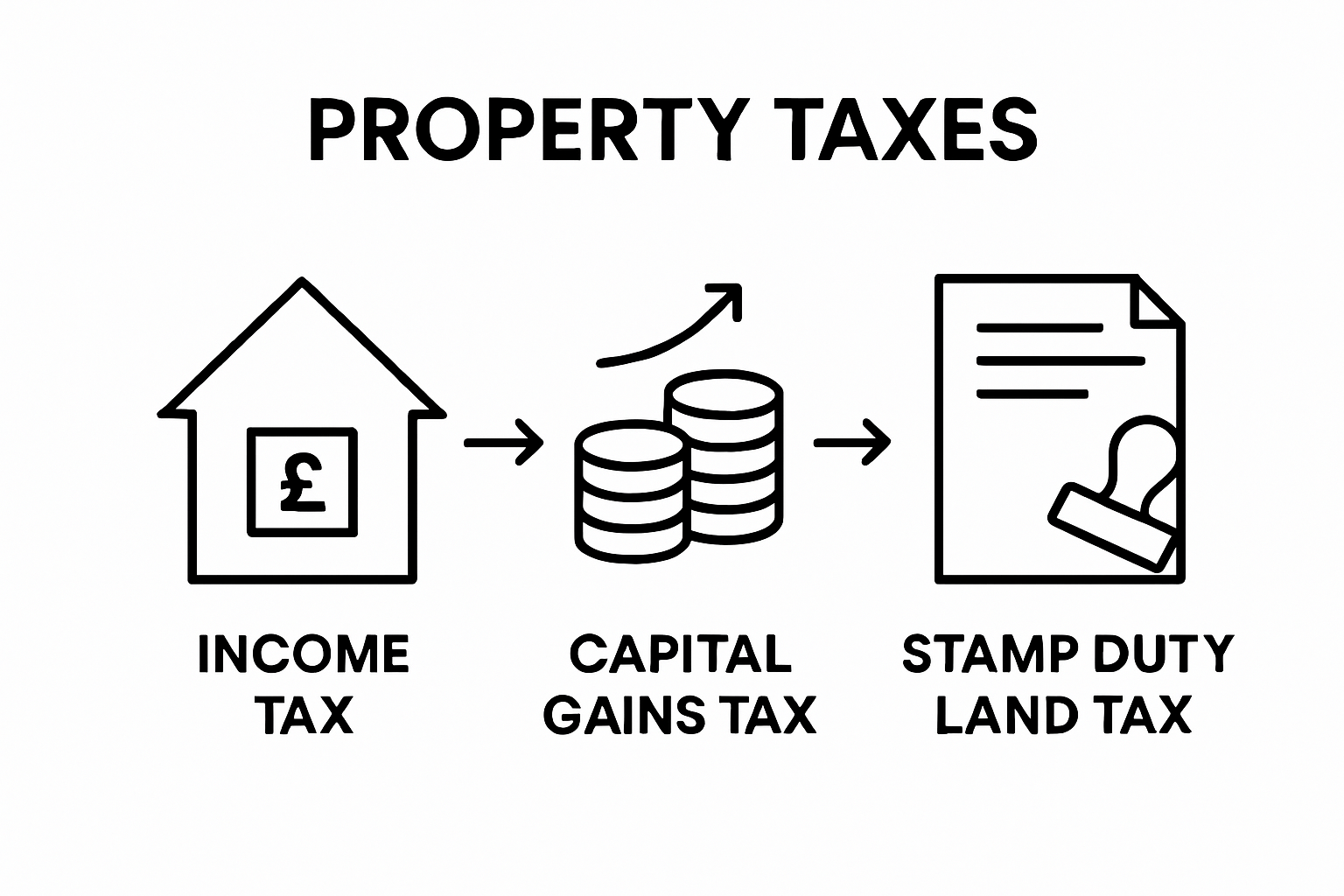
    According to guidance from the UK Government Tax Authority, property
    Infographic showing three main UK property investment taxes

    investment taxation primarily involves:

    • Income tax on rental earnings
    • Capital Gains Tax when selling investment properties
    • Stamp Duty Land Tax for property acquisitions
    • Potential inheritance tax implications

    Calculating Tax Liabilities

    Rental income taxation operates as ordinary income, with investors able to deduct legitimate expenses such as mortgage interest, property maintenance, and management costs. Capital Gains Tax applies when selling a property, calculated by determining the difference between purchase and sale prices, minus allowable expenses and potential tax-free allowances.

    Key considerations for UK property investors include:

    • Understanding marginal tax rate implications
    • Tracking allowable expense deductions
    • Monitoring annual tax-free investment allowances
    • Considering potential tax relief strategies

    Successful property investors in the UK recognise that comprehensive tax understanding transforms potential financial obligations into strategic opportunities. By developing nuanced knowledge of the taxation landscape, investors can optimise their portfolios, minimise tax liabilities, and create more robust long-term investment strategies.

    To clarify and compare the main types of property investment tax discussed in the article, here is a concise comparison table outlining their nature, when they apply, and notable features:

    Tax Type Applies To Description Notable Features
    Rental Income Tax Income from letting property Taxed as ordinary income Allowable expense deductions
    Capital Gains Tax (CGT) Sale of property at a profit Tax on profit from sale, using purchase and sale price Up to 28% tax rate in the UK, allowances
    Stamp Duty Land Tax (SDLT) Purchasing property above thresholds Tax paid on property acquisitions above set values Varies based on property price, thresholds
    Inheritance Tax Transfer of property in estate after death Tax on value of estate transferred upon inheritance Thresholds and reliefs may apply

    Key Concepts and Terminology in Property Investment Tax

    Property investment tax involves a complex lexicon of specialised terminology that investors must understand to navigate the financial landscape effectively. Mastering these key concepts enables more strategic decision making and helps prevent potential tax complications.

    Essential Tax Terminology

    Investors require a comprehensive understanding of specific tax-related terms that directly impact their property investment strategies. Learn about advanced investment approaches that leverage nuanced tax knowledge.

    According to taxation research publications, critical terminology includes:

    • Capital Gains Tax (CGT): Tax levied on profit from selling an asset
    • Stamp Duty Land Tax (SDLT): Tax paid when purchasing property above specific thresholds
    • Marginal Tax Rate: The tax rate applied to an investor’s highest income bracket
    • Allowable Expenses: Costs that can be legally deducted from taxable property income

    Critical Tax Calculation Concepts

    Taxable income represents the financial foundation for property investment tax calculations. This encompasses rental earnings minus permitted deductions, which ultimately determines an investor’s tax liability. Depreciation allowances provide another crucial mechanism, enabling investors to offset property value reduction against taxable income.

    Key conceptual considerations for property investors include:

    • Understanding basis value calculations
    • Recognising the difference between income and capital gains
    • Tracking changes in tax legislation
    • Identifying potential tax relief opportunities

    Successful property investors develop a sophisticated understanding of these terminological nuances, transforming complex tax language into strategic financial planning tools. By comprehending these concepts, investors can make more informed decisions, optimise their tax positions, and create more robust investment portfolios.

    To help investors unfamiliar with property investment tax terminology, the following table organises key terms and their definitions as covered in the article:

    Term Definition
    Capital Gains Tax (CGT) Tax levied on profit from selling an asset
    Stamp Duty Land Tax (SDLT) Tax paid when purchasing property above specific thresholds
    Marginal Tax Rate The tax rate applied to an investor’s highest income bracket
    Allowable Expenses Costs that can be legally deducted from taxable property income
    Taxable Income Rental income minus legitimate deductions, forming the basis for property tax calculation
    Depreciation Allowances Permitted offset for property value reduction against taxable income

    tax planning property

    Secure Your Property Investments with Expert Tax Guidance

    Facing uncertainty about property investment tax can stop your financial growth before it starts. Many investors struggle to navigate the complexities of capital gains tax, allowable expenses, and the strategic use of tax deductions. If tax efficiency feels overwhelming or you are missing out on the most lucrative opportunities due to confusion about regulations, you are not alone. At Sylvest.co.uk, we bridge this gap by giving you both clarity and access to exclusive property deals, so you do not miss important tax advantages again.

    https://sylvest.co.uk

    Why wait and risk reducing your returns? Visit Sylvest.co.uk now to find real-time investment opportunities that fit your financial goals. Learn more about how our platform can simplify property acquisition and connect you directly with knowledgeable deal sourcers who understand the UK tax landscape. Explore our tailored investment strategy resources and discover your next profitable step today.

    Frequently Asked Questions

    What is property investment tax?

    Property investment tax refers to the system of taxes levied on rental income, capital gains from property sales, and other expenses associated with real estate investments. It serves to generate government revenue, regulate market dynamics, encourage specific investment behaviours, and redistribute economic wealth.

    How does capital gains tax work in property investment?

    Capital Gains Tax (CGT) is applied when a property is sold for a profit. It is calculated based on the difference between the property’s purchase price and its selling price, minus any allowable expenses or exemptions that may apply.

    What types of deductions can property investors claim?

    Property investors can claim several deductions against their taxable income, including mortgage interest, property maintenance costs, management fees, and depreciation allowances on property value reduction.

    Why is understanding property investment tax important for investors?

    Comprehending property investment tax is crucial as it helps investors make informed financial decisions, predict tax implications, optimise their tax liabilities, and align their investment strategies with existing tax regulations.

    Article generated by BabyLoveGrowth

  • Understanding Property Valuation: Key Concepts Unveiled

    Understanding Property Valuation: Key Concepts Unveiled

    Property valuation might sound like a technical chore, but it underpins every intelligent decision in the real estate world. Most people are surprised to learn that gross rental yield and capital appreciation rates often make or break a property investment. Yet, the real secret is that valuation is much more than figures on a spreadsheet. It is a blend of science, statistics, and local insight. Once you see how the numbers reveal hidden opportunities and risks, you will never look at property the same way again.

    Table of Contents

    Quick Summary

    Takeaway Explanation
    Property valuation is multifaceted It assesses economic worth through factors like location, condition, and market trends.
    Utilise multiple valuation methods Comparative analysis, income approach, and cost estimation ensure accurate property estimations.
    Valuation aids in informed investment decisions It helps investors identify opportunities and mitigate risks in real estate transactions.
    Advanced metrics enhance valuation insight Metrics like rental yield and capital appreciation provide deeper economic understanding.
    Valuation supports economic stability Accurate assessments prevent market speculation and promote sustainable real estate practices.

    What is Property Valuation? Defining the Basics

    Property valuation is a systematic process of determining the economic worth of real estate based on multiple factors and analytical techniques. Understanding property valuation involves recognising it as more than a simple price tag, but a comprehensive assessment that considers numerous intricate elements affecting a property’s market value.

    Core Principles of Property Valuation

    At its fundamental level, property valuation represents an expert estimation of a property’s monetary value, considering various critical aspects. According to the California State Board of Equalization, property value is fundamentally based on the principle of anticipation – essentially, the present worth of expected future benefits from property ownership.

    Key factors influencing property valuation include:

    • Location and neighbourhood characteristics
    • Physical condition and age of the property
    • Comparable sales in the surrounding area
    • Potential rental income
    • Structural integrity and potential maintenance requirements
    • Local economic conditions and property market trends

    Valuation Methodologies

    Professional property valuers employ multiple approaches to determine a property’s worth. These methodologies are not arbitrary but grounded in rigorous analytical frameworks designed to provide the most accurate assessment possible.

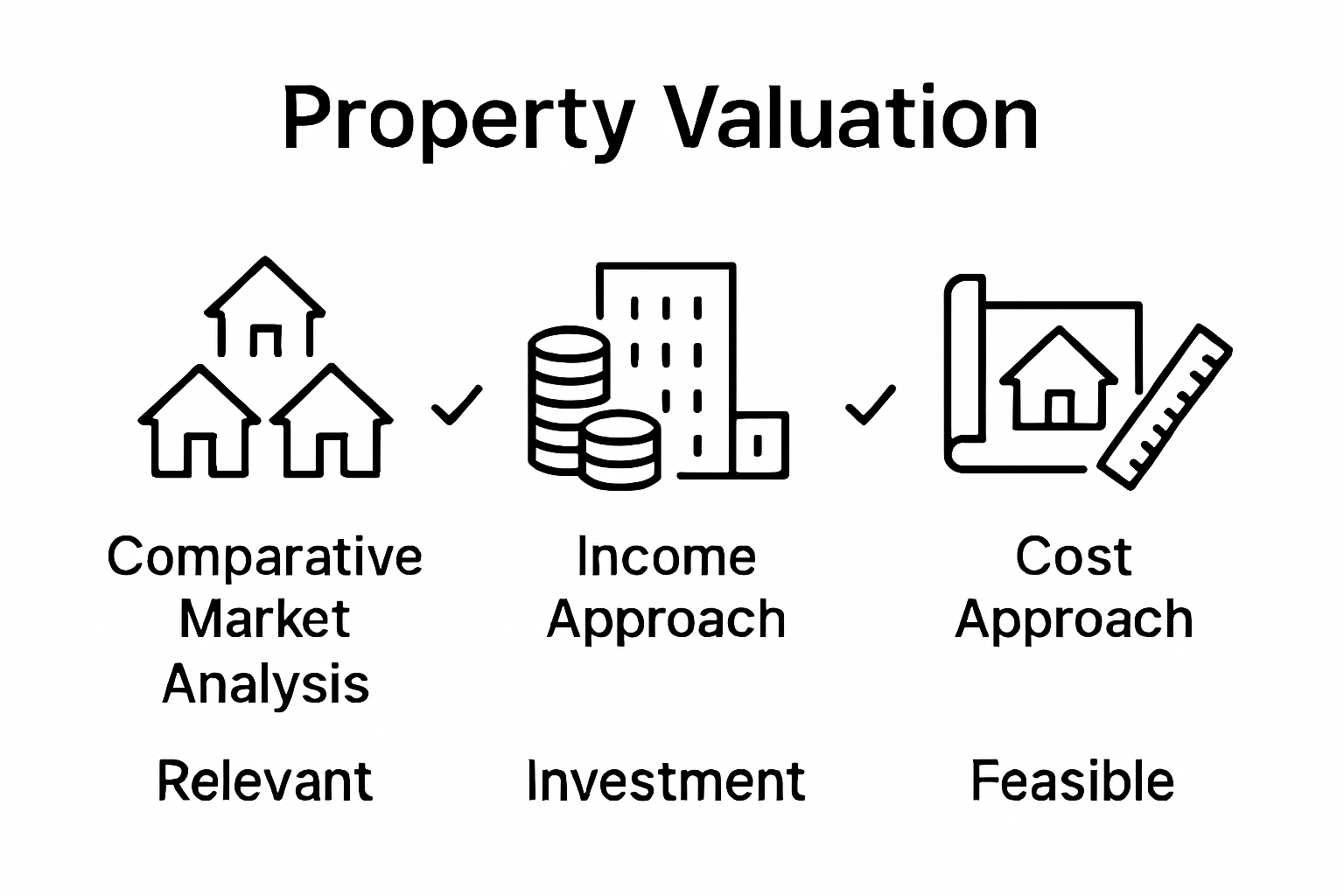
    Three primary valuation approaches exist:

    • Comparative Market Analysis: Comparing the property with similar recently sold properties in the same area
    • Income Approach: Calculating potential rental income and investment potential
    • Cost Approach: Estimating the cost to rebuild or replace the property from scratch

    Each methodology offers unique insights, and professional valuers often cross-reference multiple approaches to arrive at a comprehensive and reliable property value estimation.

    To help clarify the main approaches used in property valuation, the following table compares the three primary valuation methodologies, outlining their core focus and typical applications.

    Methodology Core Focus Typical Application
    Comparative Market Analysis Comparison with recent similar property sales Standard residential property valuation
    Income Approach Projected rental income and investment return Buy-to-let and income-generating assets
    Cost Approach Cost to rebuild or replace the property from scratch Specialised or unique properties

    Infographic comparing three property valuation approaches

    The goal is not just to assign a number but to provide a nuanced understanding of a property’s true market worth.

    By understanding these fundamental principles, property investors, homeowners, and professionals can make more informed decisions about real estate transactions, investments, and strategic property management.

    Why Property Valuation Matters in the Real Estate Market

    Property valuation represents a critical mechanism for understanding the complex financial landscape of real estate investments. Far beyond a simple numerical assessment, it serves as a strategic tool that enables stakeholders to make informed decisions, mitigate risks, and maximise potential returns.

    Economic Significance of Accurate Valuation

    Precise property valuation plays a pivotal role in multiple financial contexts. According to International Valuation Standards Council, valuation provides essential market intelligence that influences investment strategies, lending decisions, and economic planning.

    Key economic implications of property valuation include:

    • Determining fair market prices for property transactions
    • Establishing collateral value for mortgage and lending purposes
    • Supporting taxation and insurance assessments
    • Guiding investment allocation strategies
    • Facilitating transparent and equitable property exchanges

    Risk Management and Investment Strategy

    For property investors, accurate valuation is not just a recommendation but a fundamental requirement. Valuation helps investors understand potential risks, projected returns, and the intrinsic value of their real estate assets. Learn more about strategic property investment to enhance your understanding of how valuation impacts investment decisions.

    Investors rely on comprehensive valuation to:

    • Identify undervalued or overvalued properties
    • Compare potential investment opportunities
    • Assess long term appreciation potential
    • Develop robust portfolio diversification strategies
    • Negotiate more effectively during property transactions

    Beyond individual investments, property valuation contributes significantly to broader economic stability. By providing transparent, data driven assessments, it helps prevent market speculation and supports more sustainable real estate ecosystems. Professionals across finance, real estate, insurance, and government sectors depend on these precise evaluations to make critical decisions that impact individual and collective economic prosperity.

    How Property Valuation Works: The Science Behind the Value

    Property valuation represents a sophisticated scientific process that blends quantitative analysis, market research, and nuanced understanding of complex economic dynamics. It is not merely a number but a comprehensive interpretation of a property’s intrinsic and potential economic value.

    Fundamental Economic Principles

    According to the California State Board of Equalization, property valuation operates on several core economic principles that guide systematic assessment. These foundational concepts ensure a structured and rational approach to determining property worth.

    Key economic principles driving valuation include:

    • Supply and demand interactions
    • Changes in socioeconomic patterns
    • Principle of conformity
    • Principle of contribution
    • Environmental and neighbourhood influences

    Analytical Methodologies

    Valuation professionals employ sophisticated analytical techniques to transform raw data into meaningful economic insights. These methodologies go beyond simple mathematical calculations, incorporating complex statistical models and comprehensive market research.

    Critical analytical approaches involve:

    • Comparative Market Analysis: Examining similar property transactions
    • Regression Analysis: Statistical modeling of price determinants
    • Hedonic Pricing Models: Evaluating property characteristics and their impact on value
    • Geospatial Analysis: Understanding location specific value drivers

    Explore advanced property investment strategies to understand how these analytical methodologies translate into practical investment decisions.

    The science of property valuation continues to evolve, integrating advanced technologies like artificial intelligence and machine learning to enhance predictive accuracy. By combining rigorous economic principles, sophisticated analytical techniques, and deep market understanding, valuation professionals provide critical insights that drive informed real estate investment and economic decision making.

    Key Concepts in Property Valuation: Understanding the Metrics

    Property valuation metrics represent sophisticated tools that transform complex real estate data into meaningful financial insights. These metrics are not arbitrary numbers but carefully constructed indicators that reveal a property’s intrinsic economic potential and market positioning.

    Fundamental Valuation Metrics

    Professional valuers utilise a range of critical metrics to construct a comprehensive understanding of property value. These metrics provide a nuanced perspective that goes beyond surface level assessments.

    Key valuation metrics include:

    For easier reference, the following table organises key property valuation metrics and provides a concise explanation of each, assisting investors and readers in understanding their significance.

    Metric Description
    Gross Rental Yield Annual rental income as a percentage of property value
    Net Rental Yield Rental income minus expenses as a percentage of property value
    Capital Appreciation Rate Annual percentage increase in property value
    Price to Rent Ratio Comparison of property price to annual rental income
    Capitalisation Rate Net operating income divided by property market value
    • Gross Rental Yield: Total annual rental income divided by property value
    • Net Rental Yield: Rental income minus operational expenses
    • Capital Appreciation Rate: Percentage increase in property value over time
    • Price to Rent Ratio: Comparative metric between purchase price and annual rental income
    • Capitalisation Rate: Net operating income divided by property market value

    Advanced Performance Indicators

    Beyond basic metrics, advanced performance indicators offer deeper insights into a property’s economic potential. According to Royal Institution of Chartered Surveyors, these sophisticated metrics help investors understand complex market dynamics.

    Advanced performance metrics encompass:

    • Comparables Analysis: Benchmarking against similar property transactions
    • Investment Multipliers: Assessing potential return on investment
    • Risk Adjusted Returns: Evaluating performance relative to potential market risks
    • Depreciation Rates: Understanding property value erosion over time

    Discover comprehensive property investment strategies to leverage these advanced valuation metrics effectively.

    Understanding these metrics requires more than mathematical calculation. It demands a holistic approach that considers market trends, economic conditions, and property specific characteristics. By mastering these valuation metrics, investors can make more informed decisions, identify potential opportunities, and develop robust investment strategies that align with their financial objectives.

    property valuation key metrics

    Real-World Applications: How Valuation Influences Investment Decisions

    Property valuation transcends theoretical calculations, serving as a critical strategic tool that directly shapes investment decision making across diverse real estate scenarios. It provides investors with a comprehensive framework for understanding potential risks, opportunities, and long term financial implications.

    Investment Strategy Optimization

    According to the National Bureau of Economic Research, property valuation plays a pivotal role in developing sophisticated investment strategies. Professional investors leverage detailed valuation insights to make nuanced decisions that balance potential returns with calculated risk management.

    Key strategic considerations include:

    • Identifying properties with undervalued market potential
    • Assessing long term appreciation trajectories
    • Evaluating investment diversification opportunities
    • Understanding neighbourhood economic development trends
    • Calculating potential risk adjusted returns

    Risk Mitigation and Portfolio Management

    Valuation serves as a critical risk management mechanism, enabling investors to make informed decisions that protect and enhance their investment portfolios. By providing a granular understanding of property economic characteristics, valuation helps investors navigate complex market dynamics.

    Risk mitigation strategies involve:

    • Comparative Market Analysis: Benchmarking property against similar market segments
    • Comprehensive Due Diligence: Examining multiple valuation metrics
    • Scenario Planning: Understanding potential market fluctuation impacts
    • Investment Threshold Assessment: Establishing clear investment criteria

    Explore advanced property investment strategies to develop a more sophisticated approach to real estate investments.

    Ultimately, property valuation is not just about determining a price point but creating a strategic roadmap for intelligent investment decisions. By transforming complex data into actionable insights, valuation empowers investors to make decisions that align with their financial goals, risk tolerance, and long term wealth creation strategies.

    Unlock Real Value from Property Valuation with Confidence

    Are you struggling to translate valuation principles into real-world investment opportunities? Understanding terms like comparative market analysis and risk-adjusted returns is powerful, but many investors still feel uncertain when bridging the gap between theory and action. The biggest challenge remains turning analysis into decisive moves that build your portfolio and safeguard your future. You deserve a smoother path from insight to investment.

    https://sylvest.co.uk

    Let Sylvest.co.uk turn your knowledge into opportunity today. Find off-market property deals, search by investment strategy, and benefit from transparent tools designed for investors just like you. If you want to see practical examples of how strategy shapes returns, explore our investment strategies. Start maximising your next property move right now on Sylvest.co.uk — your smarter way to invest in property.

    Frequently Asked Questions

    What is property valuation?

    Property valuation is the process of determining the economic worth of real estate by considering factors such as location, market trends, and property characteristics.

    Why is accurate property valuation important?

    Accurate property valuation is crucial for making informed decisions regarding buying, selling, investing, and financing properties. It helps establish fair market prices and assess potential risks and returns.

    What are the main methodologies used in property valuation?

    The three primary methodologies are: 1) Comparative Market Analysis, which compares similar properties; 2) Income Approach, focusing on potential rental income; and 3) Cost Approach, estimating replacement costs of the property.

    What metrics are essential in property valuation?

    Key metrics include Gross Rental Yield, Net Rental Yield, Capital Appreciation Rate, Price to Rent Ratio, and Capitalisation Rate, all providing insights into a property’s performance and value.

    Article generated by BabyLoveGrowth